

Find your team’s mojo
Reignite the spark that makes a team unstoppable - connected, aligned and empowered to perform at their best
“The visual and interactive methods he used to extract the thoughts we needed to define our direction were incredibly insightful. By the end, the team could feel a remarkable difference.”
Peter Yates, Director of Account Management, Axonn

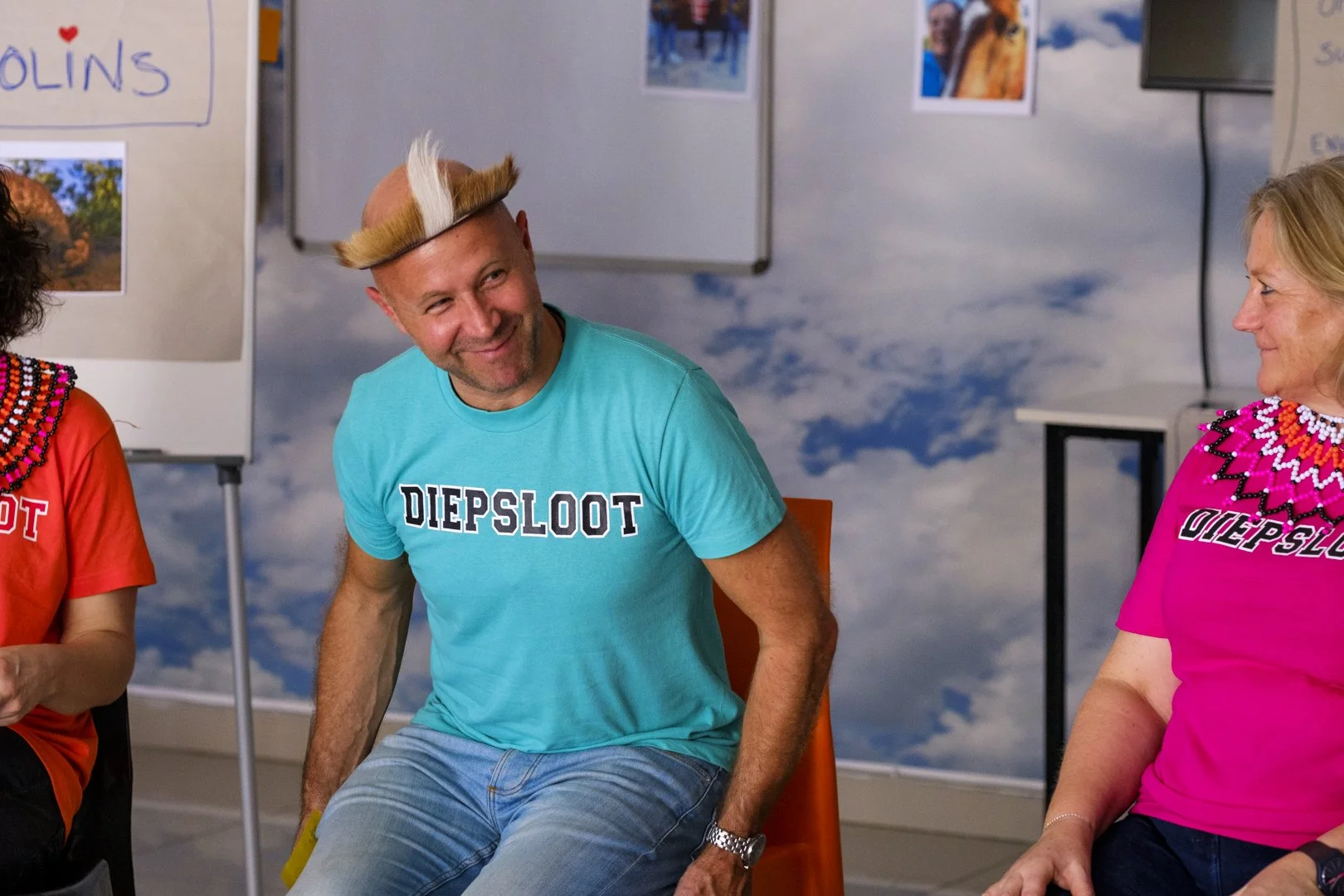
The team relationship is the client
Our VUCA (volatile, uncertain, complex, ambiguous) world has evolved to a BANI environment that's brittle, anxious, non-linear and incomprehensible. Your organisation is navigating constant change – market uncertainty, rapid tech, hybrid working, competing priorities. And you still need your teams at their best.
Nowhere are these shifts more visible than in how teams actually work together. More teams than ever are hybrid or virtual, and the tech meant to connect us often fuels disconnection, straining cohesion across dispersed teams.
Team coaching rebuilds that connection, because here the relationship itself is the client – not just the individuals, but what's happening between them right now, and everything they're connected to.
That's why the same approach that rebuilds trust in a team also rebuilds it in a business partnership: co-founders, joint ventures, agency-client relationships – anywhere results depend on the relationship as much as the plan.
A stronger relationship means a more empowered team or partnership… and because of that, accelerated performance.
Team coaching creates transformational change
Training tells them what to do. Team coaching helps teams uncover their own solutions in the moment and take ownership for implementing their learning. That’s the shift: from individuals all doing their own thing, to one connected system pulling in the same direction, with real clarity on what they’re doing and why. That’s not a quick fix. That’s transformation that sticks.
Build psychological safety and real trust
Deepen interdependence across hybrid or virtual teams
Align behind a shared purpose and clear ways of working
Shift toxic conflict into productive conflict
Finally have the conversations you’ve been avoiding
Improve retention – people who feel connected stay
Perform better; the relationship is the work, not separate from it
You won’t just perform better. You’ll feel better.
“The sessions exceeded our expectations, it provided challenge in the right way and helped us bring humanity and a sense of vulnerability which in turn created connection.”
Louise Firth – Director of Engagement – Ronald McDonald House Charity
Data supports tending to team relationships
This isn't just a nice idea. Google's two-year study of 180+ teams (Project Aristotle)* found psychological safety – how safe people feel to speak up, disagree, admit mistakes – mattered more to team performance than talent, seniority, or team size. And Gallup's latest global data* puts the cost of workplace disengagement at roughly $10 trillion a year, with connection at the team level driving most of it. Disconnected teams and partnerships aren't just harder to manage. They're a measurable drag on performance and profit.
Business happens through relationships. Connected people become empowered teams – and empowered teams are what's still standing, and still performing, when everything else moves.
*Google's Project Aristotle team-effectiveness research (re:Work); Gallup, State of the Global Workplace.

My approach: systems, models, and emergence
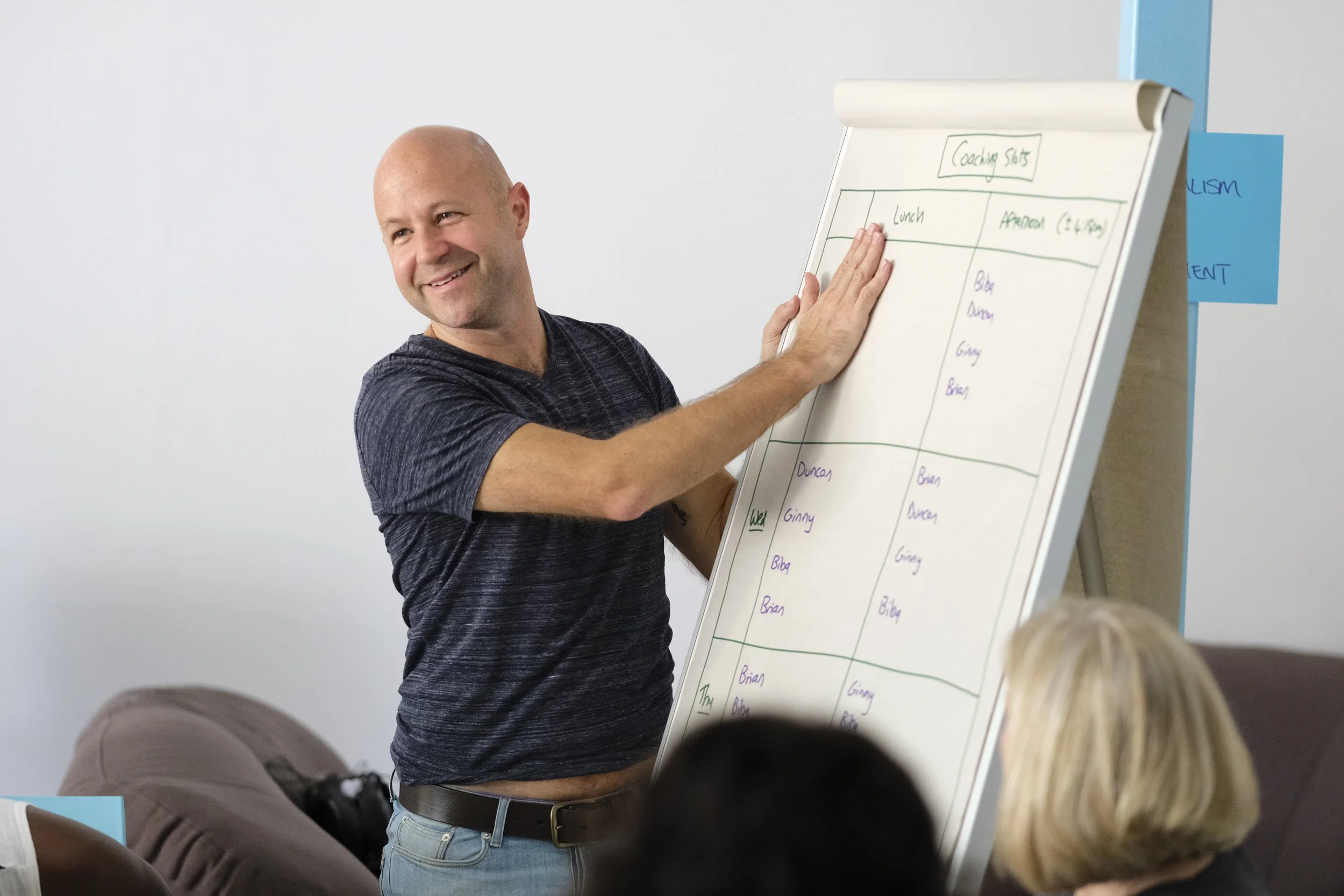
I use Organisation and Relationship Systems Coaching (ORSC) - a globally-respected systems methodology. I don't just practise it. I teach it, as faculty for CRR Global.
I don't coach individuals in isolation. I coach the system – the team, or the partnership, as a living, connected whole. That means we're not patching symptoms; we're working with what's actually happening between people, so the change feels natural and holds long after I leave the room.
I use models and frameworks too, when they serve the moment. But just as much, I work in real time – following what's actually alive in the room right then, not just a fixed plan of where we're supposed to end up. That's an emergent approach: working with what's emerging between the team members right now, because that's usually where awareness of the team really deepens and from that the real transformation happens.
“We did a 3-hour facilitated session at our team offsite, focused on building trust. It broke down walls and let the team see each other differently. It was the highlight of a 4-day offsite.”
Global Executive Recruiting Leader, tech sector

How I start
After connecting with the sponsor or team leader, we typically start with a 90-minute session with the team itself – think of it as a chemistry session, but for teams. The team is the client here, so this is where we find out if there's a genuine fit, both ways. We talk about why team coaching, and why now – I explain our work, what we'll actually do together, and answer every question straight.
Should we agree to proceed, we then typically, ask the team to measure itself by using The Team Diagnostic Assessment (TDA), often alongside 1-2-1 interviews with each team member, to build an evidence-based picture of how your team operates and where the team itself wants to go. This accelerates the team's transformation.
It covers two dimensions proven to set high-performing teams apart: productivity (team leadership, accountability, alignment, goals and strategies, decision making, resources, proactive) and positivity (communication, trust, respect, values diversity, camaraderie, constructive interaction, optimism) – both under real strain today.
We'll re-run it at the end, so you see – with real data – how far the team has moved.
What comes out of this is the emergence of a set of outcomes the team itself wants to work toward – not what the team leader assumes they should. Teams that choose their own focus show up more engaged, every time.
Light touch, low investment, short sessions – but this is exactly how we build a safe container for the real work ahead.
The programme itself typically, runs four to six half-day sessions over six months, virtual, in-person, or a mix, and might include 1-2-1 coaching, to support team effectiveness. As we progress, we'll be constantly re-connecting with the sponsor or team leader to check go or no-go then align and adapt the programme to the team's evolution in the moment.
Individual leadership coaching
Since leadership is relational too, I coach individual leaders through the same systems lens – usually alongside team work, or for a leader navigating a transition or promotion, a tricky team dynamic, or feedback they don’t know what to do with.
We often start with the Leadership Circle Profile, a 360° tool that quickly surfaces what’s helping or hindering your leadership impact. Sessions run from one debrief to a six-month programme, shaped around what you need.